(559) 325-2597
Garden Bridges, Custom Redwood Garden Bridges - Redwood Garden Bridges
Custom Japanese Garden Bridge for a Zen Garden in San Francisco, California
Published: Mon, 26 Oct 2026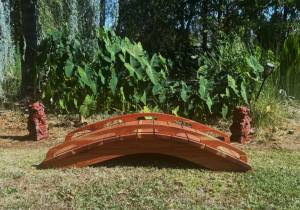
Bringing Traditional Japanese Garden Design to a San Francisco Backyard
A carefully selected garden bridge can transform an outdoor space, creating a distinctive focal point while connecting different elements of the landscape. In San Francisco, California, a homeowner planning a Zen-inspired backyard garden chose a custom Japanese-style wooden bridge from Redwood Garden Bridges to complement a landscaped rock river and create a peaceful, balanced setting.
Unlike projects where a bridge is primarily intended for regular foot traffic, this installation was planned with aesthetics as the main priority. The homeowner wanted a graceful, highly arched bridge with low-profile railings that would preserve open views across the garden.
The result is a custom bridge design tailored to the proportions of the backyard, the width of the decorative rock river, and the overall vision for the finished landscape.
A Japanese Garden Bridge Designed Around the Landscape
The San Francisco backyard was undergoing a landscaping transformation with the help of a professional landscape designer. The planned garden featured an area measuring approximately 15 feet by 14 feet, with a decorative rock river approximately 4 feet wide running through the space.
The homeowner envisioned a traditional Japanese-style bridge spanning the rock feature, introducing a curved architectural element to an otherwise relatively compact outdoor setting.
Several considerations influenced the bridge selection:
-
A pronounced arch: The bridge needed a clearly visible upward curve that would create an elegant silhouette.
-
Low-profile railings: The homeowner wanted the surrounding landscape to remain visible rather than be concealed behind tall bridge railings.
-
Appropriate proportions: The bridge had to complement the approximately 4-foot-wide rock river without overwhelming the garden.
-
Decorative appeal: The bridge would primarily serve as a visual centerpiece rather than a heavily used pedestrian crossing.
-
Japanese-inspired styling: The completed structure needed to harmonize with the garden's rocks, plants, and other Zen-inspired features.
These requirements made a customized Japanese garden bridge an appealing choice for the project.
Choosing a Custom 5-Foot Japanese Garden Bridge
Among the available designs, the homeowner was particularly interested in the 5-foot Japanese garden bridges offered by Redwood Garden Bridges.
A bridge in this size category was well suited to the project's intended scale. With a rock river measuring approximately 4 feet across, a 5-foot bridge offered a proportionate starting point for the design.
However, the standard appearance of the bridge was not the only consideration. The homeowner wanted a more pronounced curve than the approximately 2.5-inch arch initially considered.
After reviewing a bridge design with an arch measuring approximately 6 inches, the homeowner selected the higher-arched configuration.
Why the 6-Inch Arch Was Important
The difference between a 2.5-inch arch and a 6-inch arch can significantly change the appearance of a relatively short garden bridge.
A shallower curve gives a wooden bridge a more understated profile. A higher arch creates a stronger visual statement, particularly when the structure is viewed from a distance or framed by rocks and ornamental planting.
For this San Francisco project, the approximately 6-inch arch was selected to achieve the traditional curved appearance the homeowner had envisioned.
The higher arch also helps establish a visual distinction between the bridge and the rock river beneath it, making the bridge a prominent feature of the garden composition.
Low Railings That Preserve the Open Garden View
The railings were another important part of the design.
While some garden bridges feature substantial posts and taller handrails, this homeowner preferred a low-railing configuration that would not interfere with views across the backyard.
In a garden measuring approximately 15 by 14 feet, the height and visual weight of each feature matter. Oversized railings could make the bridge appear disproportionate to its surroundings.
The selected design instead emphasizes the graceful curve of the walkway while keeping the railings visually unobtrusive.
This approach is especially appropriate for decorative Japanese garden bridges, where the relationship between the bridge, surrounding stones, plants, and open space is central to the overall appearance.
Crossing a Decorative Rock River in a Zen Garden
One of the distinguishing features of this San Francisco installation is that the bridge was planned to cross a dry rock river rather than a flowing stream.
Dry riverbeds are commonly incorporated into Japanese-inspired gardens to suggest the movement of water through carefully arranged stones and gravel.
A wooden garden bridge can enhance this effect by creating the impression of a crossing without requiring an actual pond, stream, or water circulation system.
For homeowners considering garden bridges for similar settings, this type of landscaping offers several possibilities.
A bridge can connect two planting areas, provide a focal point along a garden path, or simply introduce a traditional architectural element above a decorative stone arrangement.
In this particular project, the bridge's visual role was especially important. Because the homeowner did not expect to walk across it frequently, the primary design considerations centered on its shape, proportions, and integration with the surrounding landscape.
The combination of a curved Japanese bridge and a stone river helps establish the quiet, contemplative atmosphere associated with Zen-inspired garden design.
Customizing Garden Bridges for Smaller San Francisco Backyards
San Francisco homeowners often need to make thoughtful use of limited outdoor space. A successful backyard design depends on selecting features that contribute to the landscape without making it feel crowded.
A custom-built garden bridge allows the structure to be adapted to the dimensions and visual character of the property.
For the San Francisco project, several details worked together to create a coordinated design:
-
A compact bridge appropriate for a decorative river approximately 4 feet wide.
-
A custom arch of approximately 6 inches.
-
Low railings that help maintain uninterrupted views.
-
A traditional Japanese-inspired profile.
-
A design intended to complement the ongoing Zen garden landscaping.
Rather than selecting a bridge solely by its overall length, the homeowner considered how its shape would appear within the completed garden.
That distinction is important when planning decorative garden bridges. The most suitable bridge is not necessarily the largest or most elaborate model. It is the design that best complements the proportions and character of the landscape.
From Custom Design to Delivery in San Francisco, CA
The project began with the homeowner exploring Japanese bridge designs and comparing different arch profiles.
As the landscape design progressed, attention turned to the bridge's dimensions, railing height, and the appearance of the arch.
The homeowner ultimately approved the approximately 6-inch arch design, providing a clear direction for the custom bridge.
Redwood Garden Bridges arranged to build the selected configuration and deliver it to the homeowner in San Francisco, California.
At the time of the project update, the backyard landscaping was still in progress, and delivery of the custom bridge was scheduled for the following week.
The project illustrates how choosing a bridge during the landscape planning stage can help coordinate its appearance with surrounding garden features before the final installation.
Garden Bridges for Zen Gardens, Rock Rivers, and Residential Landscapes
Although this project is located in San Francisco, the design considerations apply to residential landscapes throughout California and across the United States.
Japanese-style wooden bridges can be incorporated into a wide variety of outdoor settings, including:
-
Zen-inspired gardens with gravel and decorative stones.
-
Dry creek beds and rock rivers.
-
Small backyard landscapes.
-
Ornamental ponds and water gardens.
-
Landscaped pathways and planting areas.
-
Traditional Japanese-inspired residential gardens.
Each environment presents different considerations for bridge length, width, arch height, railing configuration, and placement.
A decorative bridge crossing a narrow dry creek bed may benefit from a compact design with a pronounced arch, while a bridge intended for frequent pedestrian use requires particular attention to walking surface, structural requirements, and safe access.
Choosing the appropriate configuration helps ensure that the bridge fits both the landscape and its intended purpose.
Custom Garden Bridges Delivered Throughout California and the USA
The San Francisco Zen garden project demonstrates the value of selecting a bridge that responds to a specific landscaping vision.
From the approximately 4-foot rock river to the carefully chosen 6-inch arch and low-profile railings, the design was shaped by the homeowner's preference for an elegant, decorative Japanese garden feature.
Redwood Garden Bridges builds wooden garden bridges for residential landscapes and ships them to customers throughout California and across the United States.
Whether the setting is a compact backyard in San Francisco, a Japanese-inspired garden elsewhere in California, or a larger landscaped property in another state, the right bridge can become a defining architectural feature.
Explore the collection of garden bridges from Redwood Garden Bridges to discover wooden bridge designs for Zen gardens, decorative rock rivers, ponds, and custom outdoor landscapes.
- Bridge Articles
- Wooden Garden Bridges - What to Consider
- curved double-rail garden bridge
- Low-Profile Redwood Garden Bridge
- Best Garden Bridges Gallery
- Japanese Zen Garden Bridges
- Routered Heavy Duty Handrails
- Natural Redwood Walkway Footbridge no post
- SunBurst Spindles Bridges
- High Arch Garden Bridges
- Half Spindle Garden Bridges
- Picket & Spindle Garden Bridges
- Zen Moon Garden Bridges
- 3D Videos Garden Bridges
- Asian-Zen-Inspired Garden Bridges
- Pedestrian Trail Wooden Bridges
- Top Rated Garden Bridges
- 40 ft High Quality Garden Bridges
- Traditional Zen Japanese Garden Bridge
- Swimming Pool Bridges Steps
- Handcrafted Trex Composite Garden Bridges
- Large Wooden Garden Bridges
- Country-Style Redwood Garden Bridge
- Wheelchair Ramps
- Heavy-Duty-Tractor- Bridges
- Torii Gate
- Horse Trail Bridges
- Wedding Garden Bridges
- Post Caps Garden Bridges
- Garden Bridge Accessories
- Water Garden Links
- Garden bridge plans
- Koi for Sale
- Redwood Characteristics
- Fish-safe Wooden pond bridges
- Our Vision and Mission Statement
- Garden Bridges Testimonials 1
- Garden Bridges Testimonials 2
- Tractor Bridges
- Monet Bridges
- Asian Style Zen Gardden Bridges
- Articles 2017
- Articles 2018
- Articels 2021
- About Your Bridge Order