
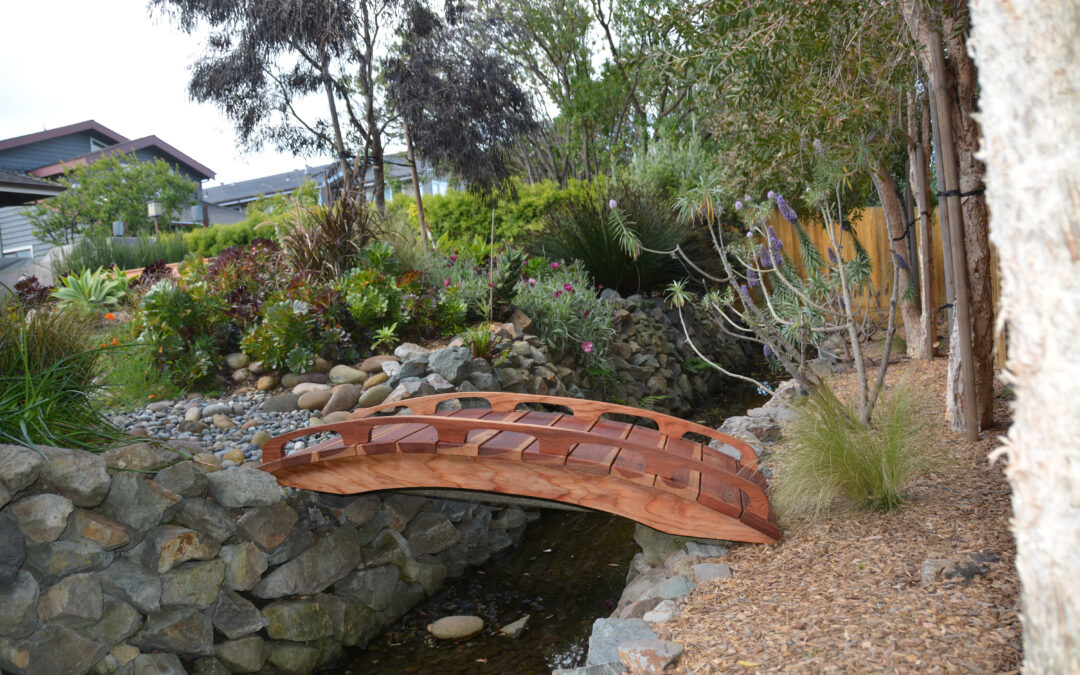
Japanese bridges are among the most iconic elements of Japanese landscape architecture. Known for their elegance, symbolism, and harmonious integration with nature, these bridges serve not only as functional structures but also as profound artistic and cultural statements. In both Japan and places influenced by Japanese design—such as California—these bridges continue to inspire admiration for their aesthetic simplicity and deep connection to the environment.
The Essence of Japanese Garden Bridges
In Japan, bridges (called hashi or bashi) hold meanings far beyond their physical purpose. Traditionally built in gardens, temples, and shrines, they symbolize transition—both literal and spiritual. Crossing a Japanese bridge often represents moving from the mundane world to a sacred or peaceful realm. This symbolic journey is a core element of Japanese garden philosophy, where every stone, plant, and structure plays a role in achieving balance and serenity.
Design and Construction
Japanese bridges are remarkable for their diversity of styles. Some are gracefully arched, while others are flat and minimalistic. Materials vary from wood and stone to bamboo and, in modern adaptations, metal or concrete. The most famous types include:
- Taiko-bashi (Drum Bridges): High-arched wooden bridges resembling the curve of a drum. Their reflection in still water creates a perfect circle, symbolizing harmony and perfection.
- Yatsuhashi (Eight-Plank Bridges): Series of zigzagging planks, often found over ponds filled with irises. The design encourages slow, meditative walking and mindful observation of nature.
- Flat Garden Bridges: Simple wooden crossings that blend seamlessly with the natural surroundings, emphasizing subtlety and humility.
What sets Japanese bridges apart is their integration with the landscape. They are never isolated objects of architecture but rather components of a broader visual and emotional composition. The shape, color, and materials are chosen to complement the surrounding plants, stones, and water features.
Symbolism and Philosophy
In Japanese culture, bridges carry deep philosophical meaning. They represent passage, transformation, and connection. In Shinto belief, a bridge can link the human world with the divine. In Zen Buddhism, it may symbolize the journey toward enlightenment. Even in secular gardens, bridges encourage visitors to pause, reflect, and engage with nature’s rhythm.
The red color often seen on Japanese bridges, particularly in temple gardens, is not merely decorative. It symbolizes protection against evil spirits and vitality. Likewise, curved bridges are said to ward off negative energies, as evil is believed to travel only in straight lines.
Japanese Bridges in California
California, with its Pacific Rim connections and strong appreciation for Asian art and design, has become one of the most significant regions outside Japan to embrace the tradition of Japanese bridges. The state’s climate and diverse landscape make it a perfect setting for Japanese-style gardens that incorporate these symbolic structures.
In cities like San Francisco, Los Angeles, and San Diego, Japanese gardens featuring arched wooden bridges or stone crossings can be found in public parks and cultural centers. These bridges often serve as focal points within meticulously designed gardens filled with koi ponds, cherry blossoms, and maples. They offer urban dwellers a moment of tranquility amid the noise of modern life—a connection between natural serenity and human artistry.
California’s Japanese Tea Garden in San Francisco’s Golden Gate Park is one of the most celebrated examples of this cultural integration. Its curved drum bridge, rising over calm water, has become an emblem of peace and aesthetic balance. Similar designs appear throughout the state, blending Japanese craftsmanship with Californian landscapes that feature native plants, rolling hills, and coastal light.
Modern Interpretations and Sustainability
In contemporary California, designers and landscape architects continue to reinterpret Japanese bridge traditions in new ways. Some use reclaimed wood or sustainable bamboo to reflect environmental consciousness—a modern echo of Japan’s respect for natural materials. Others blend minimalist Japanese principles with California’s open, sunlit aesthetic, creating bridges that are both functional walkways and works of art.
These structures also serve as cultural bridges—connecting East and West, tradition and innovation. In this sense, the Japanese bridge has found new meaning in California: it unites not only physical spaces but also people and philosophies.
Conclusion
Japanese bridges are more than architectural features; they are expressions of harmony, philosophy, and the human relationship with nature. In California, their presence reflects both aesthetic appreciation and a deep respect for cultural exchange. Whether spanning a quiet pond in Kyoto or a reflective pool in a Californian garden, these bridges continue to invite contemplation, symbolizing passage—not just across water, but between worlds, ideas, and emotions.
