

A 12 ft garden bridges are a versatile and visually striking addition to any outdoor space. This size offers the perfect balance between functionality and aesthetics, making it ideal for crossing small streams, ponds, dry creek beds, or gently sloped garden areas. Whether used as a practical walkway or a decorative focal point, a 12 ft garden bridge provides durability, elegance, and strong visual presence—especially when constructed from high-quality materials such as redwood.
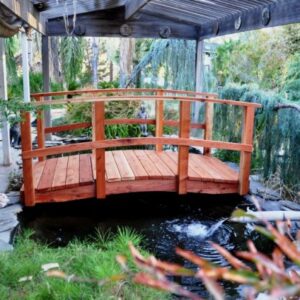
Why Choose a 12 ft Garden Bridge?
A 12 ft garden bridge is long enough to span meaningful distances while remaining compact enough for residential gardens. This dimension works exceptionally well in medium to large landscapes where shorter bridges may look undersized and longer bridges become unnecessary or overly dominant.
Key advantages of a 12 ft garden bridge include:
- Ability to cross wider water features or landscaped gaps
- Proportional scale for most private gardens
- Strong visual impact without overwhelming the surroundings
- Structural flexibility for flat or arched designs
- Compatibility with both decorative and load-bearing use
Garden bridges of this length naturally draw the eye and create a sense of flow and transition within the landscape.
Redwood as the Ideal Material for a 12 ft Garden Bridge
Redwood is widely regarded as one of the best materials for outdoor garden bridges. When building a 12 ft garden bridge, redwood offers a unique combination of strength, durability, and natural beauty.
Structural Advantages of Redwood
Redwood has a high strength-to-weight ratio, making it ideal for longer spans such as a 12 ft garden bridge. It supports consistent loads without excessive flexing, which is essential for stability and long-term performance.
Natural Resistance
Redwood naturally resists:
- Moisture and rot
- Insect damage
- Fungal growth
- Warping and cracking
This resistance makes redwood garden bridges particularly suitable for environments near water, where humidity and exposure are constant factors.
Visual Appeal
Redwood’s warm tones and fine grain enhance the natural look of garden bridges. Over time, it can weather to an attractive silvery patina or be sealed to maintain its rich color, depending on design preference.
Core Construction Elements of a 12 ft Garden Bridge
Building a durable 12 ft garden bridge requires careful attention to structural components. Each element contributes to safety, longevity, and overall appearance.
Support Beams
The main beams form the backbone of the bridge. For a 12 ft garden bridge, these beams are typically laminated or cut from thick redwood planks to ensure sufficient load capacity. In arched designs, the beams are carefully shaped to distribute weight evenly across the span.
Cross Bracing
Cross braces are installed between the main beams to prevent twisting and lateral movement. Proper spacing of cross bracing is especially important for garden bridges exceeding ten feet in length.
Decking Boards
Redwood decking boards are installed perpendicular to the support beams. Small gaps between boards allow water drainage and prevent pooling, which extends the lifespan of the garden bridge.
Footings and Foundations
A stable foundation is critical. A 12 ft garden bridge usually rests on concrete footings, stone bases, or compacted gravel pads. Proper foundations prevent settling and maintain alignment over time.
Flat vs Arched 12 ft Garden Bridges
Both flat and arched designs work well at a 12 ft length, but each offers different benefits.
Flat 12 ft Garden Bridge
- Easier to construct
- Suitable for level terrain
- Ideal for accessibility and everyday use
- Clean, minimalist appearance
Arched 12 ft Garden Bridge
- Enhanced visual elegance
- Better water clearance over streams
- Traditional garden bridge aesthetic
- Strong focal point in landscape design
Redwood performs exceptionally well in both configurations due to its flexibility and structural integrity.
Load Capacity and Safety Considerations
A properly built 12 ft garden bridge can easily support multiple people at once when constructed with adequate beam thickness and secure fasteners. Using stainless steel or galvanized hardware prevents corrosion and maintains structural reliability.
Optional handrails can be added for:
- Increased safety
- Decorative enhancement
- Compliance with specific garden design requirements
For bridges near water features, handrails are often recommended for peace of mind.
Maintenance of a Redwood 12 ft Garden Bridge
One of the major benefits of redwood garden bridges is minimal maintenance. However, regular care ensures maximum longevity.
Recommended maintenance practices include:
- Annual inspection of fasteners and joints
- Cleaning debris and leaves from the surface
- Reapplying sealant or oil every one to two years
- Monitoring foundations for movement or erosion
With proper care, a redwood 12 ft garden bridge can last for decades.
Landscaping Integration and Design Impact
A 12 ft garden bridge naturally becomes a central design element. It works particularly well when paired with:
- Water features such as ponds or streams
- Stone pathways and stepping stones
- Native plants and ornamental grasses
- Subtle lighting for evening visibility
Garden bridges of this size help define movement through the space while adding depth and architectural interest.
Long-Term Value of a 12 ft Garden Bridge
Investing in a redwood 12 ft garden bridge adds lasting value to a property. Beyond functionality, it enhances the emotional and visual experience of the garden. The combination of natural materials, thoughtful construction, and timeless design ensures that the bridge remains attractive and reliable for years to come.
A well-built 12 ft garden bridge is more than a crossing—it is a statement of craftsmanship, balance, and connection within the landscape.
