

For years my seed trays and potting mix were basically peat with a few extras. It was light, uniform, and easy. But once I learned what peat extraction does to peatlands—and how many peat-free options actually work better in living soil—I changed course. Below is the guide I wish I’d had: why I quit peat, what I replaced it with, and how a simple design tweak (a small garden bridge) helped the whole garden function better.
Why Peat Had to Go
1) It isn’t renewable on a human timescale.
Peat forms over thousands of years in wetlands that lock away massive amounts of carbon. Digging it up releases that carbon and damages rare habitats. That didn’t sit right with my “organic” label.
2) It can fight biology, not feed it.
Peat is low in nutrients and microbial diversity. Great for sterile seed starts, not great for building rich soil life. When it dries, it becomes hydrophobic—water beads and runs off—so seedlings suffer unless you micromanage moisture.
3) It skews pH.
Peat is acidic. That can be useful for a handful of acid lovers, but most veggies and herbs prefer closer to neutral.

What I Use Instead (and When)
I stopped hunting for a single “peat twin.” Instead, I match materials to the job—seed starting, potting, mulching, or bed building—and let biology do the heavy lifting.
Core Ingredients
- Homemade compost
Mature, crumbly, earthy smell. Sift for seed trays; use unsifted in beds. It inoculates mixes with microbes and slow, balanced nutrition. - Leaf mold
Shredded leaves left to decompose 12–18 months. Silky, sponge-like structure equals elite moisture management for seed starts and mulches. - Coconut coir
A by-product of coconut processing. Good water retention without the peat baggage. Rinse/soak thoroughly and add calcium (see recipes) to balance initial potassium/sodium. - Composted bark fines / wood fiber
Adds structure and air space, especially for perennials and woody plants. - Rice hulls or perlite
For drainage and aeration. Hulls slowly break down and add silica; perlite is inert and long-lasting. - Worm castings (vermicompost)
A little goes a long way (5–15%). Teeming with microbes and plant-available nutrients; boosts seedling vigor. - Biochar (charged)
Porous carbon that holds water and nutrients; must be pre-soaked in compost tea or urine-dilution (1:10) to avoid robbing nitrogen. - Well-made green-waste compost / mushroom compost
Great bulk organic matter; check for contaminants and salinity. Blend rather than rely on a single source.
Acid-loving plants? Use pine needle mulch or ericaceous peat-free mixes built from coir + bark + leaf mold rather than running back to peat.
My Go-To Recipes (Peat-Free)
Seed Starting Mix (fine-textured, low nutrient):
- 40% leaf mold (sieved)
- 40% coir (rehydrated)
- 15% compost (sieved)
- 5% worm castings
- Optional: a pinch of basalt rock dust per liter
General Potting Mix (veg & herbs in pots):
- 35% compost
- 35% coir
- 20% bark fines or wood fiber
- 10% rice hulls or perlite
- Charge with: 1 tbsp kelp meal + 1 tbsp neem seed meal per 10 L, or use an organic slow-release per label
Raised Bed Refill / Top-Up (per 100 L):
- 50 L compost (mixed sources)
- 30 L screened topsoil
- 10 L leaf mold
- 5 L biochar (pre-charged)
- 5 L coarse material (hulls/perlite)
- Blend in 1–2 kg rock mineral mix if your soil tests low
Coir Conditioning Note:
Before mixing, soak coir in water with 1 tsp calcium nitrate or 1 tbsp garden lime per 10 L to offset high potassium and improve cation balance.
Mulches That Outperform Peat
- Leaf mold or shredded leaves for beds—cool roots, feed fungi, reduce watering.
- Straw/hay (seed-free) around potatoes, squash, tomatoes—excellent moisture conservation.
- Wood chips on paths and around perennials—fungal highway, long-lasting.
- Living mulches/cover crops (clover, phacelia)—weed suppression and free nitrogen.
The Garden Bridge That Changed My Layout
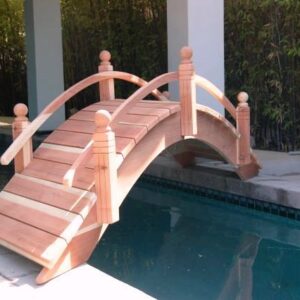
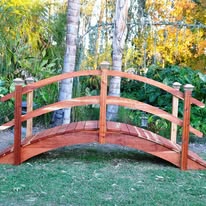
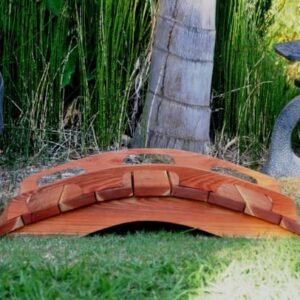
Going peat-free nudged me to rethink access and soil compaction. I added a small arched garden bridges over a shallow swale/dry creek that channels roof runoff to a rain garden. The benefits surprised me:
- Healthier soil: The bridge keeps feet off beds during wet spells, protecting soil structure so peat-free mixes stay airy.
- Water management: Bridging over a swale lets water infiltrate without muddy detours.
- Wildlife corridor: A bridge frames a mini-pond edge where frogs and pollinators hang out—natural pest control.
- Beauty and flow: It turns a utilitarian path into a focal point, drawing the eye through the space.
Tip: Build from reclaimed hardwood or larch. Aim for 90–120 cm (36–48″) wide so a wheelbarrow fits. Add thin battens for grip and finish with raw linseed oil or a non-toxic exterior finish.
How to Transition Without Losing a Season
- Trial first. Start one bed and your seed-starting trays with the recipes above. Observe watering needs (coir and leaf mold hold more water than you think).
- Dial in moisture. Bottom-water seed trays. If the surface crusts, mist lightly; don’t overwater.
- Feed lightly. Peat-free mixes often carry more biology—use a gentle liquid feed (seaweed or fish hydrolysate) at ¼ strength once true leaves appear.
- Plant deeper mulches. After transplanting, mulch immediately to stabilize moisture and temperature.
- Add paths/bridge. Define routes early so you never step on amended soil. A small bridge over the swale or rain-garden inlet keeps traffic flowing.
- Observe and adjust pH. If compost-heavy mixes drift alkaline, blend in leaf mold; if too acidic, a light dusting of garden lime.
Troubleshooting (Common Peat-Free Wobbles)
- Seedlings look pale: Increase worm castings to 10% or give a weak kelp/fish feed.
- Slow drainage: Add more bark fines/rice hulls; check that coir isn’t over-compacted.
- Algae on trays: Improve airflow and bottom-water; sprinkle a thin layer of dry sand on the surface.
- Fungus gnats: Let the top 1 cm dry between waterings, use yellow sticky cards, and drench once with Bacillus thuringiensis israelensis (BTI) if needed.
Sourcing Ethically
- Mix your inputs: compost from your heap + municipal green-waste + a bagged certified peat-free blend. Diversity reduces the risk of any one product being off.
- Check for credentials (e.g., responsibly sourced coir, low-contaminant green-waste).
- Prioritize local materials: leaves, wood chips, straw, and biochar from nearby producers.
The Payoff
Dropping peat didn’t lower yields. If anything, it raised resilience: fewer wilted afternoons, richer crumb structure, and more soil life. Combining peat-free mixes with mulch, defined paths, and that modest garden bridge gave me a garden that’s easier to work in, better for wildlife, and truer to the spirit of organic growing.
