
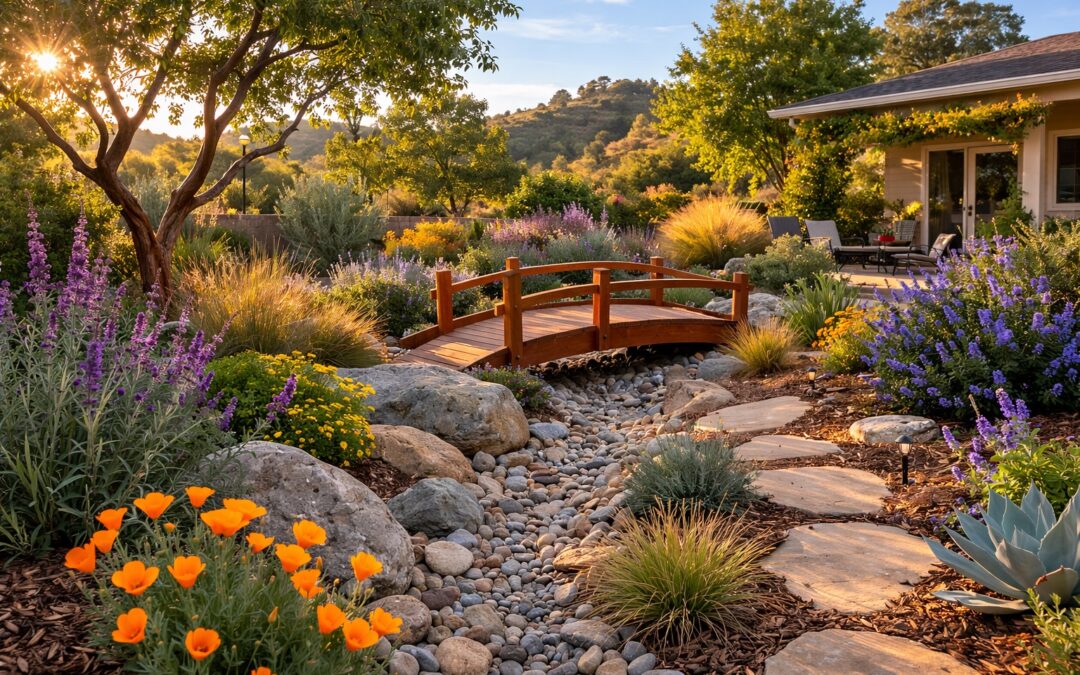
Replacing a traditional lawn with California native plants is one of the smartest ways to create a more beautiful, practical, and sustainable yard. Across California, many homeowners are rethinking the old model of large thirsty lawns and moving toward landscapes that feel more natural, use less water, support pollinators, and require less frustration over time. A well-designed native garden can still look polished, welcoming, and intentional. It does not have to feel wild, messy, or unfinished. In fact, with the right plan, it can become one of the most attractive parts of your property.

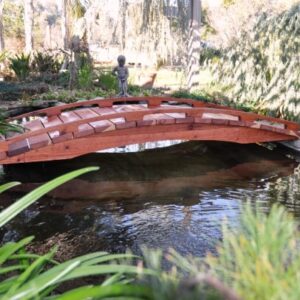
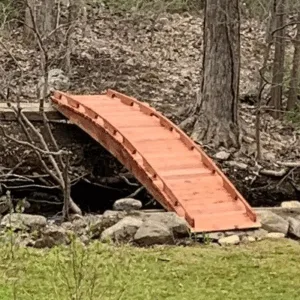

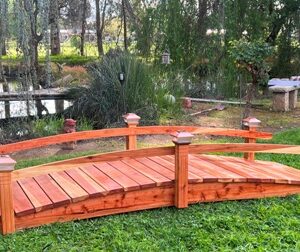
This guide explains how to remove a lawn step by step, how to prepare the site, how to choose California native plants, and how to make the finished space feel structured and visually rich. It also explores design ideas that help native gardens feel more complete, including paths, boulders, seating areas, dry creek beds, and even decorative garden bridges that can add charm and movement to the landscape.
Table of Contents
- Why Homeowners Are Replacing Lawns in California
- Before You Kill Your Lawn: What to Think About First
- Best Ways to Remove a Lawn
- Sheet Mulching Method: The Most Popular Approach
- When Is the Best Time to Remove a Lawn?
- How to Deal with Bermuda Grass and Other Problem Grasses
- Soil Preparation for California Native Plants
- How to Choose California Native Plants for Your Yard
- Designing a Native Garden That Looks Intentional
- Using a Garden Bridge in a California Native Garden
- How to Plant and Space Everything Correctly
- How to Water a New Native Garden
- First-Year Maintenance Tips
- Common Mistakes to Avoid
- A Simple Native Garden Layout Idea
- Final Thoughts
Why Homeowners Are Replacing Lawns in California
Traditional lawns often demand more from California homeowners than they give back. They need frequent irrigation, regular mowing, edging, feeding, weed control, and constant attention to stay green. In many parts of the state, this creates an odd situation where homeowners spend time and money maintaining a plant surface that does little for wildlife, struggles in heat, and can quickly look tired in drought conditions.
California native gardens offer a different path. Instead of forcing the yard to behave like a cool, high-water landscape, native planting works with the climate rather than against it. Once established, many native plants can thrive with much less irrigation than turf. They also provide texture, seasonal interest, habitat value, and a sense of place that feels much more connected to California itself.
Benefits of replacing lawn with native plants

- Lower long-term water use
- Less mowing and edging
- Better support for birds, bees, and butterflies
- More visual variety than a flat lawn
- Stronger connection to regional ecology
- Potentially lower maintenance once established
Many homeowners also discover that a native garden can feel far more luxurious than a lawn when it is carefully designed. Layers of shrubs, groundcovers, decorative gravel, and sculptural plants can create a yard that feels curated rather than generic.
Before You Kill Your Lawn: What to Think About First
Before you remove grass, take time to understand how the yard actually functions. A successful lawn replacement is not only about plants. It is about sun exposure, drainage, slope, foot traffic, visual balance, and how people move through the space.
Ask yourself these practical questions
- Which parts of the lawn are used for walking, playing, or gathering?
- Where does water naturally flow during rain?
- Which areas are full sun, part shade, or deep shade?
- Do you want a soft natural look, a modern native look, or a more traditional garden style?
- Will you keep any small patch of lawn for pets or children?
Think in terms of zones
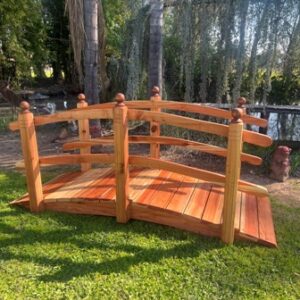
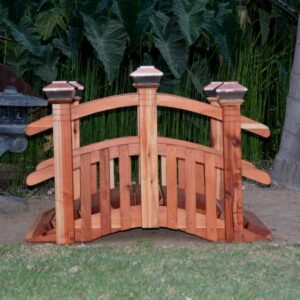
It often helps to divide the yard into zones rather than treat the whole lawn as one blank surface. One area might become a low-water native planting bed. Another might become a gravel path with boulders. Another could include a bench or seating nook. A larger yard might include a dry creek feature with one of several decorative garden bridges used as a focal point, especially if you want the landscape to feel more architectural.
Best Ways to Remove a Lawn
There is no single perfect method for removing a lawn. The best approach depends on the type of grass, your timeline, your budget, and how much labor you are willing to do.
Common lawn removal methods
1. Sheet mulching
This is one of the most popular methods because it suppresses grass while also building soil cover. It usually involves mowing the lawn low, covering it with overlapping cardboard, wetting it thoroughly, and then adding mulch on top.
2. Sod cutting
A sod cutter removes grass mechanically and gives faster visual results. It is useful when you want to plant quickly, but it can be labor-intensive and may disturb soil more than you want.
3. Solarization
Clear plastic is used to trap heat and weaken or kill grass and weed seeds. This can be effective in hot conditions but usually takes time and leaves the site looking unattractive while it is underway.
4. Manual removal
For small areas, homeowners sometimes remove turf with shovels and hand tools. It is simple but physically demanding.
For many California homeowners, sheet mulching is the most approachable starting point because it combines weed suppression with moisture retention and can be done in phases.
Sheet Mulching Method: The Most Popular Approach
If you want to kill lawn and put in CA native plants, sheet mulching is often the method people talk about first for good reason. It can be done with accessible materials and works especially well when the goal is to transition into a planted garden rather than rush into instant construction.
Basic sheet mulching process
- Mow the lawn as low as possible.
- Remove thick clumps of weeds or invasive runners where possible.
- Lay plain cardboard in overlapping layers so light cannot reach the grass.
- Wet the cardboard thoroughly.
- Add several inches of mulch on top.
- Let the area settle before planting, or cut planting holes only where needed.
Important detail: keep mulch away from stems and trunks
Mulch is useful, but piling it against plant crowns or tree trunks can cause rot and other problems. Keep a clear space around stems and trunks so air can circulate properly.
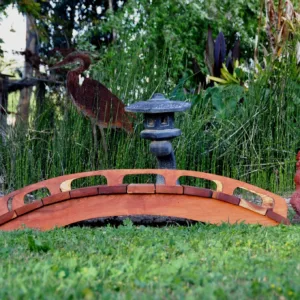
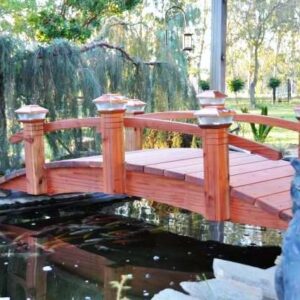
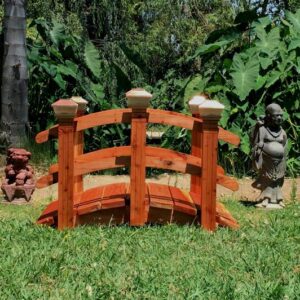
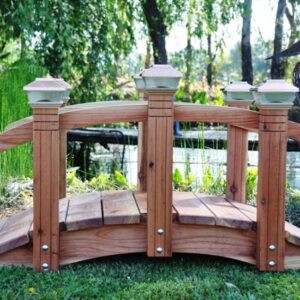
Sheet mulching also works beautifully in landscapes that include dry streambeds, stepping stones, and small visual features. If your design includes a dry creek swale, one of the most charming finishing touches can be a small bridge element. In larger residential landscapes, garden bridges can turn an ordinary converted lawn into a much more memorable outdoor space.
When Is the Best Time to Remove a Lawn?
Fall is often the best time to begin the process in much of California. The weather is milder, the soil may be easier to work with, and winter rains can help the site settle. Planting natives in fall can also give roots time to establish before summer heat arrives.
Spring can also work, but if you plant too late, young native plants may face stress during the first hot season. Summer lawn removal is possible, but it can be more difficult and less comfortable, especially inland.
How to Deal with Bermuda Grass and Other Problem Grasses
This is where many homeowners get frustrated. Some lawns are not just lawns. They are aggressive systems of runners, rhizomes, and persistent regrowth. Bermuda grass is especially notorious because it can survive partial removal and spread into planting beds later.
Why some lawns come back
When you simply cover or scrape the surface, invasive grasses may survive below the top layer. That is why lawn removal should be paired with observation and follow-up. Even after conversion, you may need to patrol the area for recurring shoots and remove them early.
Tips for difficult grass situations
- Do not assume one weekend of work will solve everything.
- Remove visible runners near edges and hardscape.
- Use strong edging to separate future planting zones.
- Watch carefully for regrowth during the first year.
- Stay consistent rather than waiting for the problem to spread again.
Soil Preparation for California Native Plants
One of the biggest mistakes people make is assuming all plants need heavily amended, rich garden soil. Many California native plants are adapted to local soil conditions and can struggle if the soil is over-improved. In some cases, too much compost or overly rich planting conditions can encourage weak growth or create irrigation patterns that do not suit the plant later.
Start by understanding your existing soil
Is it sandy, clay-heavy, rocky, fast-draining, or compacted? Does water stand after rain, or does it drain quickly? A simple soil assessment is often more useful than automatically adding large quantities of amendment.
General rule for many natives
Improve only as much as necessary for drainage, root establishment, and planting practicality. Avoid the urge to create a lush, high-input garden environment if your goal is a resilient native landscape.
How to Choose California Native Plants for Your Yard
The best plant list depends on your region, your exposure, and how you want the garden to look. California is ecologically diverse, so not every native is suitable everywhere. A coastal garden, foothill garden, inland valley yard, and Southern California slope can all have very different plant palettes.
Choose plants based on function, not just appearance
- Groundcovers for open sunny areas
- Medium shrubs for structure
- Tall accent plants for vertical drama
- Pollinator-friendly flowers for seasonal color
- Deep-rooted species for slopes or erosion control
Think about mature size
This is critical. Tiny nursery plants can become wide, dense shrubs over time. Many failed gardens look crowded not because the plants were wrong, but because they were spaced like annuals instead of long-term structural plants.
Build layers for a more natural look
A good native garden often works best when it has layers. Use low plants in front, rounded shrubs in the middle, and taller accents behind or in key focal points. Add boulders, mulch, and open negative space so the garden has rhythm and contrast rather than reading as a solid mass of planting.
Designing a Native Garden That Looks Intentional
Some people fear that replacing lawn with native plants will make their yard look wild or neglected. That usually happens only when the design lacks structure. The solution is not to avoid native plants. The solution is to design the space with clear edges, repeated forms, and visual anchors.
Elements that help a native garden look finished
- Defined paths
- Stone borders or steel edging
- Boulders placed intentionally
- Repeated plant groupings
- Mulched open space
- A focal point such as a bench, urn, sculpture, or bridge
Use contrast to create beauty
Soft planting looks better when paired with something solid or architectural. That contrast may come from a stone path, a dry creek bed, a weathered wood seat, or one of several styles of garden bridges. In a California yard, a small bridge can work especially well over a shallow bioswale, gravel wash, or decorative rock channel where water moves seasonally.
Using a Garden Bridge in a California Native Garden
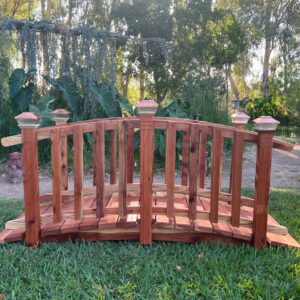
A garden bridge may not be the first thing that comes to mind when someone decides to remove a lawn, but it can be an excellent design feature in the right setting. Once a flat grass area is converted into a layered landscape, the yard often needs a focal point that gives the eye somewhere to rest. A bridge can provide that focal moment.

Where a garden bridge can fit naturally
- Over a dry creek bed lined with stone
- Across a shallow seasonal swale
- As part of a Japanese-inspired native garden composition
- Near a pond or water feature in a larger yard
- Between two planted zones connected by a gravel path
Why garden bridges work so well visually
Many native plantings are soft and organic in form. A bridge introduces line, shape, and purposeful structure. It creates a destination. It encourages movement through the landscape. Even when purely decorative, garden bridges can make a converted lawn feel more designed and less like grass was simply removed and replaced with mulch.
If you want the yard to feel elegant rather than basic, a bridge can help tie the whole composition together. For example, a dry creek lined with local stone, planted with low California natives and grasses, can be crossed by a small wooden garden bridge that adds warmth and character. This kind of composition works especially well in front yards that need a signature feature.
How to Plant and Space Everything Correctly
Once the lawn is gone and the design is clear, planting should be done with patience. Resist the urge to overfill every empty inch. A native garden often looks sparse at first, but that space is part of the long-term plan.
Smart planting principles
- Group plants with similar water needs together
- Respect mature width and height
- Plant in drifts or clusters rather than random singles
- Leave room for air circulation and maintenance access
- Use focal plants sparingly for greater impact
Do not create a mini lawn out of shrubs
Some homeowners replace turf with rows of tightly packed plants that require almost as much work as the old lawn. A better approach is to create breathable spacing, strong groupings, and intentional open areas with mulch, gravel, or stone.
How to Water a New Native Garden
Native plants are not magic. Even drought-tolerant species need careful watering during establishment. The goal is not no water. The goal is smart water, applied deeply and appropriately so roots grow down rather than staying shallow.
Early watering matters
Freshly planted natives typically need consistent establishment watering during the first season. Over time, many will need much less irrigation, but the transition phase is important. If plants are neglected too early, they may fail before they ever have the chance to become resilient.
General watering approach
- Water deeply rather than lightly and constantly
- Adjust based on heat, soil, and plant type
- Avoid creating permanently wet conditions around plants that prefer dry summer roots
- Observe plant response instead of following a rigid schedule blindly
First-Year Maintenance Tips
The first year is when your project proves itself. This is the phase when the garden still looks young, weeds try to return, and you may be tempted to second-guess the decision to remove the lawn. Stay patient. Most native gardens improve dramatically as they mature.
What to focus on in year one
- Weed control before weeds set seed
- Checking irrigation and drainage
- Monitoring mulch depth
- Watching for overcrowding or stress
- Making small adjustments rather than major changes too quickly
Expect the garden to evolve
A converted yard rarely looks finished on day one. Good landscapes develop over time. The structure may appear first, then the plantings begin to settle, spread, and connect. Decorative elements such as stones, paths, and even one of several tasteful garden bridges often become more visually effective once the planting around them matures.
Common Mistakes to Avoid
1. Removing the lawn without a real plan
Grass disappears quickly. Design problems remain much longer. Know what replaces the lawn before you start.
2. Planting too densely
This creates future crowding, poor airflow, and constant pruning.
3. Using the wrong natives for your exact site
A plant can be native to California and still be wrong for your yard conditions.
4. Overwatering established plants
Many native gardens fail not from neglect, but from treating natives like thirsty ornamental bedding plants.
5. Ignoring structure
Without edges, paths, focal points, and visual repetition, the garden may feel accidental rather than designed.
6. Letting invasive grasses come back unchecked
Early control is far easier than dealing with a full return later.
A Simple Native Garden Layout Idea
Imagine a former rectangular lawn in a California backyard. Instead of one flat green surface, the new design could include a curving gravel path, a dry creek channel with smooth stone, clusters of native shrubs, seasonal flowering perennials, and a shaded seating area. In the center or near the path crossing, a modest wooden garden bridge could span the dry creek feature and become the main visual highlight.
Example layout structure
- Front zone: low native groundcovers and decorative rock mulch
- Middle zone: dry creek swale for drainage and visual movement
- Crossing point: one small bridge for character and depth
- Back zone: layered shrubs and taller native accents
- Side edges: boulders, grasses, and pathway lighting
Why this works
This kind of design solves more than one problem at the same time. It reduces lawn, manages water visually, creates habitat, adds movement, and gives the space a strong identity. Features like garden bridges are especially effective when the goal is to make a practical drought-conscious garden still feel rich, inviting, and memorable.
Final Thoughts
If you want to kill lawn and put in CA native plants, the best approach is to think beyond removal and focus on transformation. The most successful projects are not just anti-lawn. They are pro-design, pro-function, and pro-place. They turn a thirsty surface into a landscape that belongs in California, supports life, and looks better with time.
Start with a plan. Remove the turf carefully. Choose site-appropriate native plants. Use structure, repetition, and focal points so the finished garden feels intentional. And if you want the space to feel even more distinctive, consider how elements like stone channels, pathways, and decorative garden bridges can elevate the entire design.
A lawn replacement done well is not a compromise. It is often the beginning of a far more beautiful yard.
