
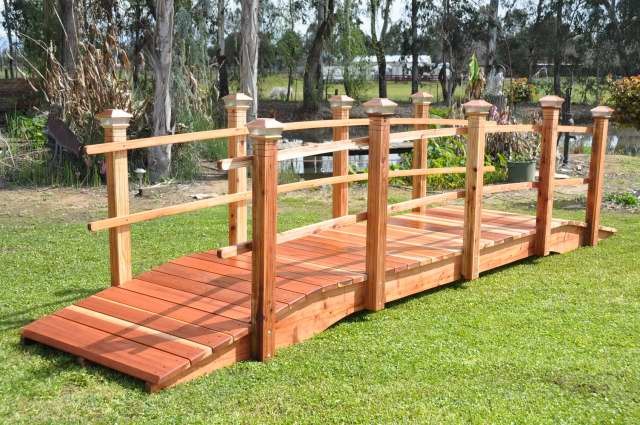
A wooden footbridge can do much more than help you cross a small creek, pond edge, drainage area or garden path. The right bridge can become the visual center of a landscape, connect outdoor spaces naturally and make a yard feel more finished, intentional and inviting. For many homeowners, the challenge is not whether a bridge would look beautiful, but how to choose the right type of wooden footbridge for the space. A small decorative bridge, a wood garden bridge, a wooden walking bridge and a heavier pedestrian bridge may look similar at first, but they are not always built for the same use.
If you are comparing wooden pedestrian bridges, small wooden footbridges, wood bridges for sale or custom redwood bridges, the best place to start is not with the style alone. The most important questions are practical: where will the bridge sit, what will it cross, how many people will use it, what span is needed, how wide it should be and whether it should be decorative, functional or both. Once those answers are clear, choosing the right wooden bridge becomes much easier.
What is a wooden footbridge?
A wooden footbridge is a small bridge designed primarily for foot traffic. It may cross a dry creek bed, garden stream, koi pond edge, drainage channel, landscaped dip, pathway break or decorative garden feature. In a residential landscape, a wooden footbridge often works as both a practical crossing and a design feature. It guides movement through the garden, creates a focal point and adds height, texture and warmth to an outdoor space.
The term wooden footbridge is often used together with phrases such as wood footbridge, wooden walking bridge, wooden walk bridge, small wooden bridge for garden, wooden garden bridge and pedestrian bridge. The difference usually comes down to scale and purpose. A decorative garden bridge may be used mainly for visual effect. A true pedestrian bridge needs stronger construction, better support, more attention to width and a structure suited to regular walking traffic.
Wooden footbridge vs wooden pedestrian bridge
A small wooden footbridge can be perfect when the bridge is mostly decorative or used lightly in a private garden. It may sit over a dry creek bed, flower bed, shallow water feature or narrow path. A wooden pedestrian bridge is a better direction when the bridge needs to feel stronger, wider and more secure for regular use. This matters when the bridge will be crossed often, used by visitors, installed over a longer span or placed in a part of the landscape where stability and comfort are important.
For a simple garden accent, a shorter wood garden bridge may be enough. For a longer crossing, a heavier structure with stronger beams, double rails and wider walking space is usually more appropriate. Redwood Garden Bridges offers pedestrian bridge options such as the 18 foot Pedestrian Bridges and 20 foot Pedestrian Bridges, which are designed for larger spaces where a stronger wood bridge is needed.
Where can you use a wooden footbridge in a garden?
A wooden footbridge works well anywhere the landscape needs a natural transition. It can cross a small stream, koi pond, drainage swale, dry creek bed, garden path, planting bed or slight change in elevation. In some gardens, the bridge solves a practical problem. In others, it creates a sense of discovery by leading the eye toward a seating area, gate, pond, sculpture, tree or quiet corner of the yard.
One of the biggest advantages of a wooden garden bridge is that it does not always need real water beneath it. A dry river bed made with stone, gravel and planting can look beautiful under a bridge. A footbridge can also be placed along a curved path to make a flat garden feel more layered. In a larger yard, a wooden pedestrian bridge can connect two outdoor zones, such as a lawn and a pond area, a patio and a garden path or a driveway-side landscape and a backyard retreat.
How to choose the right span for a wooden bridge
The span is one of the most important decisions when choosing a wooden footbridge. The bridge should comfortably cover the opening without looking too short, cramped or forced into the space. If the bridge crosses a creek, pond, drainage channel or dry bed, measure the clear distance from one stable side to the other. The bridge should rest securely on solid ground at both ends, not on soft edges that may shift, erode or settle over time.
For small decorative spaces, a short bridge can be enough. For wider crossings, long pedestrian bridges are more appropriate. When the distance becomes substantial, the bridge starts to move from a decorative accent into a functional structure. That is when stronger beams, better support, careful width selection and secure railing become more important. A long wooden bridge should feel visually balanced in the landscape and physically comfortable to cross.
What width should a wooden pedestrian bridge be?
Width affects both comfort and appearance. A narrow bridge may look charming in a small garden, but it can feel limited if people need to pass comfortably, carry garden tools, walk with children or move across the bridge often. A wider wooden pedestrian bridge feels more stable and welcoming. It also looks more proportional in open landscapes where a narrow bridge might appear too delicate for the surrounding space.
For private garden paths, a smaller width may work well. For a bridge that connects important outdoor areas or receives regular foot traffic, a wider design is often better. The Pedestrian Bridges category includes options with several width choices, which makes it easier to match the bridge to the real use of the space instead of choosing only by length.
Railings, posts and bridge safety
Railings change the look and feel of a wooden footbridge. A bridge without rails can look simple, open and minimal, especially when it is low and used as a decorative crossing. A bridge with rails feels more secure and visually substantial. Double rails give a stronger pedestrian character and can make a larger bridge look more complete. Posts, rail height and rail style should match the size of the bridge and the overall landscape.
For a small bridge over a dry creek bed, low or simple rails may be enough. For a longer pedestrian bridge, railings can make the crossing feel safer and more comfortable. They also help define the bridge as an architectural element in the garden. If the bridge is placed near water, a slope or a deeper crossing, it is worth thinking carefully about rail design, surface grip and the way people will actually use the space.
Why choose redwood for a wooden footbridge?
Wood choice matters because a garden bridge lives outdoors. It is exposed to sun, moisture, temperature changes and everyday use. Redwood is popular for outdoor bridges because it has a warm natural color, attractive grain and a classic garden look. It works especially well in landscapes where the bridge should feel organic rather than industrial. A redwood bridge can blend with planting, stone, water, mulch, gravel and natural garden paths.
A redwood wooden footbridge also has a visual advantage. The red-brown color adds warmth without needing heavy decoration. In a green garden, it stands out enough to become a focal point, but still feels natural. That is why redwood is often a strong choice for garden footbridges, pond bridges, creek bridges and custom outdoor crossings. If the goal is a handcrafted bridge that looks like part of the landscape rather than a temporary add-on, redwood is a very good material direction.
Flat, arched or curved wooden footbridge?
The shape of the bridge should match the landscape. A flatter wooden footbridge is useful when comfort, easy walking and a low profile are more important than drama. It fits well in practical garden paths, long crossings and pedestrian applications. A gently arched wooden bridge adds more character and can make even a small garden feel more designed. It draws the eye upward and creates a classic bridge silhouette.
A higher arch is more dramatic and can be beautiful over ponds, streams and formal garden features, but it should fit the space. A bridge that is too steep may look impressive in photos but feel less comfortable in daily use. A bridge that is too flat may disappear in a larger landscape. The best choice is the one that looks natural from the main viewing angles and feels comfortable when used. If the garden is formal, arched styles may work beautifully. If the bridge is primarily a pedestrian crossing, comfort and stability should guide the design.
Small wooden footbridges for gardens
Small wooden footbridges are ideal for intimate garden spaces. They can cross a narrow dry creek bed, add charm to a flower garden, create a transition between two planting zones or bring attention to a pond or water feature. A small wooden bridge can also solve a design problem in a flat yard by adding height and visual movement. Even when it is not needed for crossing, it can make the landscape feel more complete.
The key with small wooden bridges is proportion. The bridge should not overwhelm the area, but it should not look too small for the surrounding plants, stones or water feature. If the garden has low plantings, a simple low bridge may work best. If the bridge sits near larger shrubs, trees or rocks, a slightly more substantial design may look better. The bridge should feel intentional, not like an object placed randomly in the yard.
Long wooden pedestrian bridges
Long wooden pedestrian bridges require more attention than short decorative bridges. As the span increases, the structure becomes more important. A long bridge should have enough width, strong support and a design that feels stable underfoot. It should also look balanced from a distance. In a larger yard, ranch setting, commercial garden, public-facing landscape or property with a real crossing, a long pedestrian bridge can become both a practical route and a signature feature.
The 18 foot Pedestrian Bridges and 20 foot Pedestrian Bridges are examples of longer wooden bridge options for spaces that need more than a small decorative accent. They are especially relevant when the bridge must cross a wider area and still look like a handcrafted landscape feature rather than a plain utility structure.
When do you need a custom wooden bridge?
A custom wooden bridge makes sense when the space does not fit a standard size, when the crossing is unusually wide, when the landscape has a specific style or when the bridge needs special details. Customization can involve length, width, railing style, post design, finish, lights, beam strength or the overall visual character. A custom approach is especially useful when the bridge will become one of the most visible features in the garden.
If the bridge needs to fit a pond, creek, custom pathway, ranch entrance, large garden or unusual outdoor layout, a standard bridge may not give the best result. In that case, it is better to think about the full setting: where people will approach from, what they will see when crossing, what the bridge will frame and how the design will age in the landscape. A bridge should look good on the day it is installed, but it should also feel appropriate years later.
Wooden footbridge for a pond, creek or dry river bed
A pond bridge is often chosen for beauty as much as function. It frames the water, creates a viewing point and makes the pond feel more connected to the rest of the garden. A creek bridge or dry river bed bridge has a slightly different role. It helps connect paths and gives the landscape a more natural rhythm. In both cases, the bridge should be sized carefully so the ends rest securely and the structure does not look too short for the crossing.
For koi ponds and water gardens, the bridge should complement the pond without overpowering it. For dry creek beds, the bridge can be slightly more decorative because it is often part of the visual composition. For real drainage areas, practical placement matters more. Water flow, ground stability and access should all be considered before choosing the final bridge length and style.
Wooden footbridge for a garden path
A wooden footbridge can make a garden path more memorable. Instead of a simple walkway from one area to another, the bridge creates a moment of transition. It slows the experience and gives the garden a designed feeling. This works especially well in curved paths, cottage gardens, Japanese-inspired gardens, woodland gardens and landscapes with gravel, river stone or layered planting.
When using a wooden bridge on a path, think about approach and exit. The bridge should not feel disconnected from the walkway. Stone, gravel, mulch or planting can help blend the ends into the landscape. The bridge should also be placed where it makes sense visually. A bridge in a straight empty lawn may look artificial, while a bridge integrated with planting, stones and path curves will feel much more natural.
Should you choose a decorative bridge or a functional bridge?
The easiest way to avoid choosing the wrong bridge is to decide whether the bridge is decorative, functional or both. A decorative bridge mainly improves the look of the garden. It may not need to carry heavy use. A functional wooden bridge needs to be comfortable, stable and appropriate for regular crossing. Many homeowners need something between the two: a bridge that looks beautiful but also works as a real pathway.
If the bridge will be crossed daily, used by guests or placed over a meaningful gap, it should be treated as a functional pedestrian bridge. If it is mostly there to create a focal point, a smaller decorative bridge may be enough. The mistake is choosing a bridge only by appearance, then realizing later that it is too narrow, too short, too light or not comfortable enough for the way the space is used.
How to match a wooden bridge to your landscape style
A wooden footbridge should look like it belongs in the garden. In a natural landscape, a redwood bridge with warm grain, simple rails and a handcrafted look can blend beautifully with stone, shrubs, trees and water. In a formal garden, a more symmetrical bridge may work better. In a rustic property, a wider and heavier bridge can feel appropriate. In a small backyard, a lighter bridge may be more proportional.
Color also matters. Redwood’s natural red-brown tone works well with greens, grays, tan stone, water and neutral hardscaping. A sealed finish can deepen the appearance and help the bridge look more finished. Solar light options can add evening character and make a bridge feel more integrated into the outdoor living space. Details such as rail shape, post caps and width can make the difference between a bridge that simply fills a gap and a bridge that defines the garden.
Common mistakes when choosing a wooden footbridge
One common mistake is choosing a bridge that is too short. A bridge should not barely touch the edges of a crossing. It needs to sit securely and look visually balanced. Another mistake is choosing a bridge that is too narrow for the way people will use it. A narrow bridge may be fine for decoration, but it can feel uncomfortable when used as a main path. A third mistake is ignoring the rail style. Rails are not only decorative. They affect comfort, perceived safety and the overall presence of the bridge.
Another mistake is treating all wooden bridges as the same. A small decorative garden bridge and a larger wooden pedestrian bridge can serve different purposes. If the bridge will be crossed often or placed over a wider span, stronger construction and a more substantial design are worth considering. It is better to choose a bridge that fits the real use of the space than to select only the smallest or cheapest option.
Wooden bridge kits and easy assembly
Many homeowners look for wooden bridge kits because they want a bridge that can be delivered and assembled without building everything from scratch. A good bridge kit should be clear, well prepared and designed so the finished bridge looks intentional rather than improvised. Pre-cut or prepared components can save time, especially when the bridge has rails, posts, beams and decking that need to fit cleanly.
Even when assembly is designed to be straightforward, planning still matters. Before ordering a bridge, check the location, span, ground conditions, access path and final placement. Make sure there is enough room to bring the bridge components to the installation area. If the bridge is larger or heavier, think ahead about help during assembly. A beautiful wooden bridge starts with the right design, but the final result also depends on careful placement.
How a wooden footbridge can increase the value of a landscape
A well-chosen wooden footbridge can make a garden feel more complete and memorable. It adds structure to the landscape, creates a focal point and gives people a reason to move through the space. In real estate and outdoor design, features that create emotion often matter. A bridge suggests care, craftsmanship and intention. It can turn an ordinary yard into a place with character.
The value is not only visual. A bridge can make an outdoor area easier to use by connecting separated zones. It can help people cross a wet area, move through a garden more naturally or enjoy a pond from a better viewpoint. When the bridge is built with quality materials and matched to the property, it becomes part of the landscape rather than a temporary decoration.
FAQ about wooden footbridges
What is the best wood for a garden footbridge?
Redwood is a strong choice for a garden footbridge because it has a warm natural color, attractive grain and a classic outdoor look. It works well in gardens, pond areas, dry creek beds and landscaped paths where the bridge should feel natural and handcrafted.
What size wooden footbridge do I need?
The right size depends on the span, width of the path, ground conditions and how the bridge will be used. Measure the full opening and make sure the bridge can rest securely on solid ground at both ends. For regular walking traffic or wider crossings, consider a more substantial pedestrian bridge rather than a small decorative bridge.
Can a wooden footbridge be used over a dry creek bed?
Yes. A wooden footbridge can look excellent over a dry creek bed made from gravel, stone and planting. It creates a natural transition and adds height to the landscape even when there is no flowing water beneath the bridge.
Is a wooden pedestrian bridge different from a decorative garden bridge?
Yes. A decorative garden bridge may be chosen mainly for appearance, while a wooden pedestrian bridge is intended for more regular walking use. Pedestrian bridges usually need more attention to width, support, railings and overall construction.
Should a wooden footbridge have railings?
Railings are useful when the bridge is longer, higher, used frequently or placed near water or a deeper crossing. A very low decorative bridge may not always need rails, but railings can make the bridge feel more secure and visually complete.
Can I order a custom wooden bridge?
Yes. A custom wooden bridge is often the best option when the space requires a specific span, width, rail design, finish or overall style. Custom sizing is especially useful for larger gardens, ponds, creeks, ranches and unusual landscape layouts.
Final thoughts: choosing the right wooden footbridge
The best wooden footbridge is the one that fits both the landscape and the way people will use it. A small wooden bridge can bring charm to a garden path or dry creek bed. A larger wooden pedestrian bridge can create a safe, beautiful crossing over a wider space. A custom redwood bridge can become the signature feature that makes the whole garden feel designed around it.
If you are planning a real crossing or a larger landscape feature, explore the Pedestrian Bridges category and compare options such as the 18 foot Pedestrian Bridges and 20 foot Pedestrian Bridges. A well-built wooden footbridge can connect your garden physically, but it can also connect the whole design visually, turning a simple outdoor space into a more memorable and inviting landscape.
